What to do when antidepressants don't work
If you've tried medication or therapy and the depression is still there, it's not your fault and it's not the end of the road. Precision treatments that act directly on the brain circuits involved do exist. Here we explain what they are and how to know if they're right for you.
Do you recognize the symptoms of depression?
Take the PHQ-9, the most widely used screening questionnaire in clinical practice. It's free, confidential and takes less than 2 minutes.
What is treatment-resistant depression?
Depression is much more than feeling sad: it's a medical disorder that alters mood, energy, sleep and the way the brain processes motivation and pleasure. It affects about 1 in 8 people over their lifetime and is one of the leading causes of disability in Europe.
We talk about treatment-resistant depression (TRD) when symptoms persist despite having tried at least two different antidepressants at adequate doses and duration. It doesn't mean your depression has no solution: it means your brain needs an approach beyond medication alone.
About a third of people with depression don't respond satisfactorily to the first two treatments. For them, neuromodulation therapies —which act directly on the brain circuits involved— are among the alternatives with the strongest scientific backing.

Symptoms of depression: do you recognize yourself?
Depression shows up differently in each person. These are the most common symptoms; if several feel familiar for more than two weeks, it's worth talking to a professional.
- Persistent sadness, emptiness or hopelessness
- Loss of interest or pleasure in activities you used to enjoy
- Lack of energy and constant fatigue
- Sleep disturbances: insomnia or sleeping too much
- Difficulty concentrating or making decisions
- Changes in appetite or weight
- Feelings of guilt or worthlessness
- Irritability or restlessness
Many of these symptoms match the ones measured by the PHQ-9 test.
Why do antidepressants sometimes not work?
Antidepressants act globally on brain chemistry, mainly on neurotransmitters such as serotonin. They work for many people, but not for everyone: depression isn't a single disorder, but the result of alterations in networks of neurons that vary from one brain to another.
Research in recent years has shown that specific circuits are involved in depression, such as the connection between the prefrontal cortex and the regions that regulate emotion. When treatment doesn't reach those circuits precisely, the response is incomplete. That's why therapies that locate and modulate those brain networks directly can help when medication alone isn't enough.
Treatment options for resistant depression
There's no single path. These are the main alternatives when the first line of treatment hasn't worked:
Medication adjustment or combination
Switching antidepressants, combining several or adding augmenting agents. It's the usual next step, although the likelihood of response decreases with each failed attempt.
Psychotherapy
Therapies such as cognitive behavioral therapy help modify thought patterns and are a pillar of treatment, especially combined with other options.
Conventional TMS
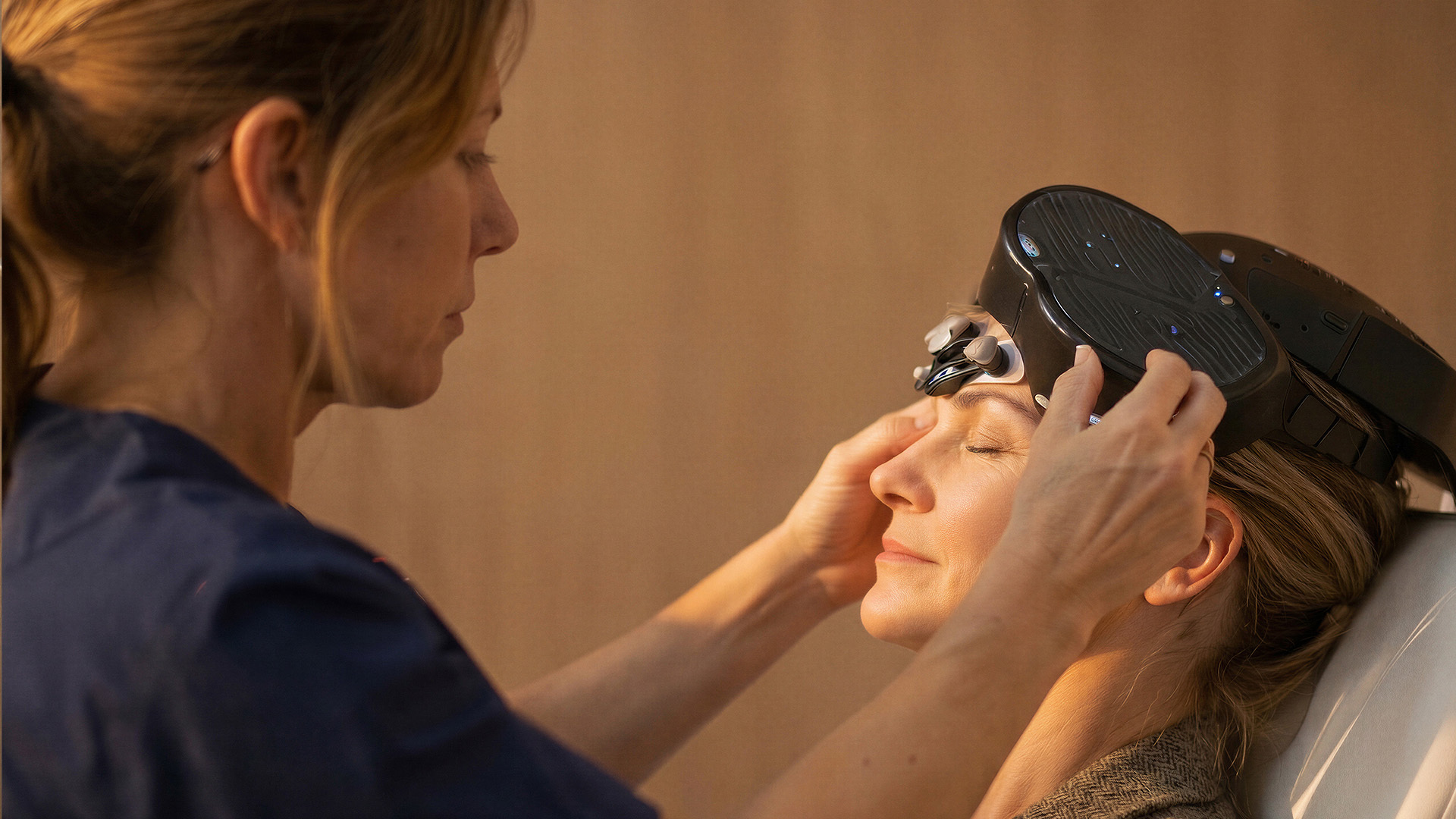
Transcranial magnetic stimulation is a non-invasive, safe technique that stimulates the brain with magnetic fields. In its standard form it uses a generic target and usually requires 4 to 6 weeks.
Neuroimaging-guided personalized TMS
The evolution of TMS: it calculates the exact stimulation point from a functional scan of your own brain and concentrates treatment into a few days. This is the approach of the Connectoma Protocol.
The most suitable option depends on your clinical history. A specialist must assess your case before recommending any treatment.
The Connectoma approach: TMS personalized to your brain
Connectoma has developed a TMS protocol that combines functional neuroimaging (fMRI), artificial intelligence and neuronavigation to treat depression with millimetric precision. Instead of applying stimulation to an approximate area, we measure how your brain works and calculate your individual target point, concentrating the full treatment into approximately 5 days. It's non-invasive, requires no anesthesia and is compatible with your current medication.
How transcranial magnetic stimulation (TMS) works
Read the full articleClinical Results
A technology guided with millimetric precision to deliver fast, safe and measurable clinical results.
Up to 79% symptom remission in drug-resistant depression (Cole et al., 2020).
79%
AI-guided brain mapping with personalized and precise stimulation at millimetric level.
Precision
Visible results in just a few days, with no adverse effects, pain or discomfort.
Few days
Your Path to well-being

Brain Scan
We perform an imaging study to understand how your brain works and find the area where to apply the treatment.
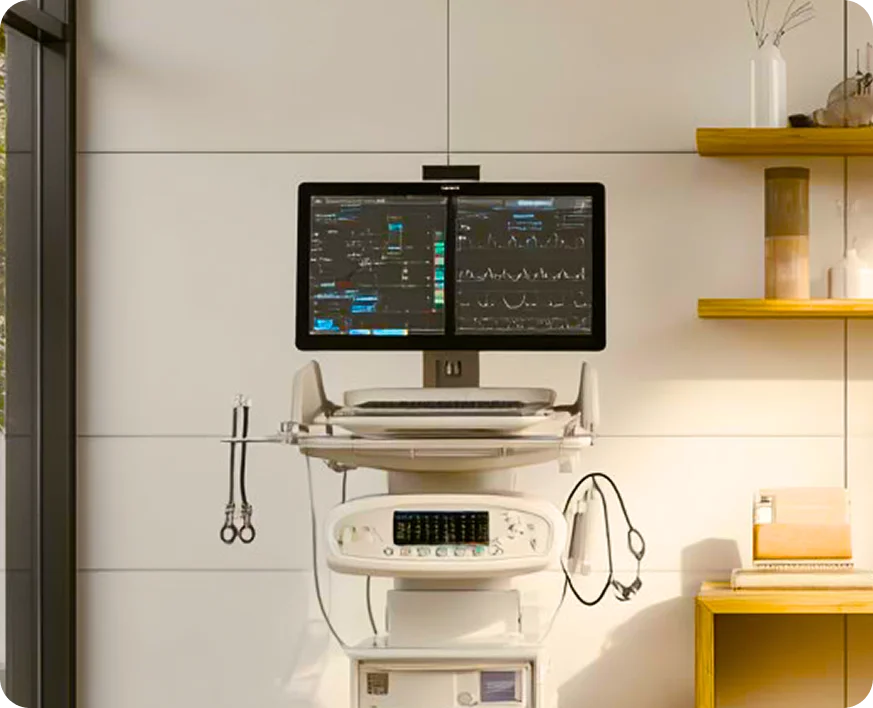
Personalized Plan
Our specialists design a unique treatment for you, tailored to your specific needs.
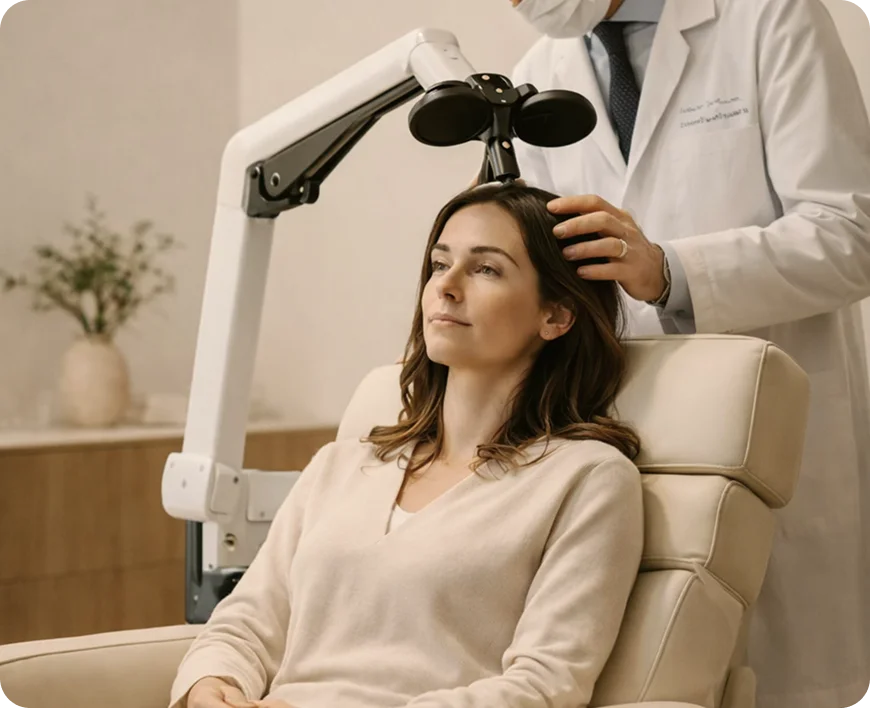
Guided Treatment
We apply transcranial magnetic stimulation (TMS) precisely in the right area of your brain to achieve the best results.

Close Follow-up
We accompany you throughout the process, evaluating your progress and adjusting treatment if necessary.
What does the science say?
Accelerated, neuroimaging-guided TMS protocols have reached remission rates of up to 79% in resistant depression in clinical studies, compared with 30-40% for conventional TMS. These results come from the precision neuromodulation research behind the Connectoma Protocol.
Explore the scientific evidenceIs personalized TMS right for you?
- You have a diagnosis of depression confirmed by a professional.
- You've tried antidepressants or therapy without the improvement you hoped for.
- You're looking for a non-invasive alternative without systemic side effects.
- You'd prefer a fast treatment that's compatible with your current medication.
A specialist will assess your case individually to confirm suitability. TMS does not replace medical evaluation.

Questions about depression treatment
It's depression whose symptoms persist despite having tried, at adequate doses and duration, at least two different antidepressants. It affects about a third of people with depression and often benefits from approaches beyond medication, such as neuromodulation.
No. TMS is non-invasive and painless. During the first sessions some people notice a slight tapping sensation on the scalp that usually fades quickly. You can return to your routine immediately after each session.
Not necessarily. TMS is complementary and you can continue your medication while receiving treatment. Your doctor will assess your case and adjust the plan if needed.
Each session lasts 10 to 15 minutes. The personalized accelerated protocol can concentrate the full treatment into around 5 days, with several sessions per day, instead of the 4 to 6 weeks of conventional TMS.
Many patients notice improvements in the first 1 to 2 weeks, although optimal effects consolidate upon completing the program. The response varies depending on each person's clinical history.
Adverse effects are minimal and temporary. The most common is mild scalp discomfort or a slight headache after the session.
The price depends on the center and the protocol indicated for your case. During the initial no-obligation assessment, our team will inform you of the cost and the options available.
Conventional TMS uses a generic target and requires 4 to 6 weeks. The Connectoma Protocol calculates your individual target point from a functional scan, applies stimulation with millimetric neuronavigation and concentrates treatment into about 5 days, with reported remission rates of up to 79% in neuroimaging-guided protocols.
At partner clinics and medical centers that meet Connectoma's quality and safety standards. We can point you to the nearest center during your assessment.
Connectoma vs Traditional Treatments
Connectoma (neuronavigated TMS)
Individual brain mapping + precise stimulation
- Mapping with fMRI, AI analysis and neuronavigation with millimetric precision.
- Intensive protocols that reduce total duration.
- Visible improvement in 1-2 weeks.
- Reported remission rates of up to 79% in neuroimaging-guided protocols.
Traditional TMS
Standard approach without neuroimaging guidance
Target location based on generic measurements with a large application area.
Typical remission rates of 30%.
Typical clinical improvement at 4-6 weeks.
Manual coil placement; less precision.
Keep learning
Clear resources to understand your treatment.
Take the first step to feel like yourself again
Take the free 2-minute test or talk to our team, no strings attached.
This page is for informational purposes and does not replace professional medical advice. If you think you may have depression, consult a healthcare professional. The clinical results cited come from precision neuromodulation studies and vary from person to person; no treatment guarantees remission.