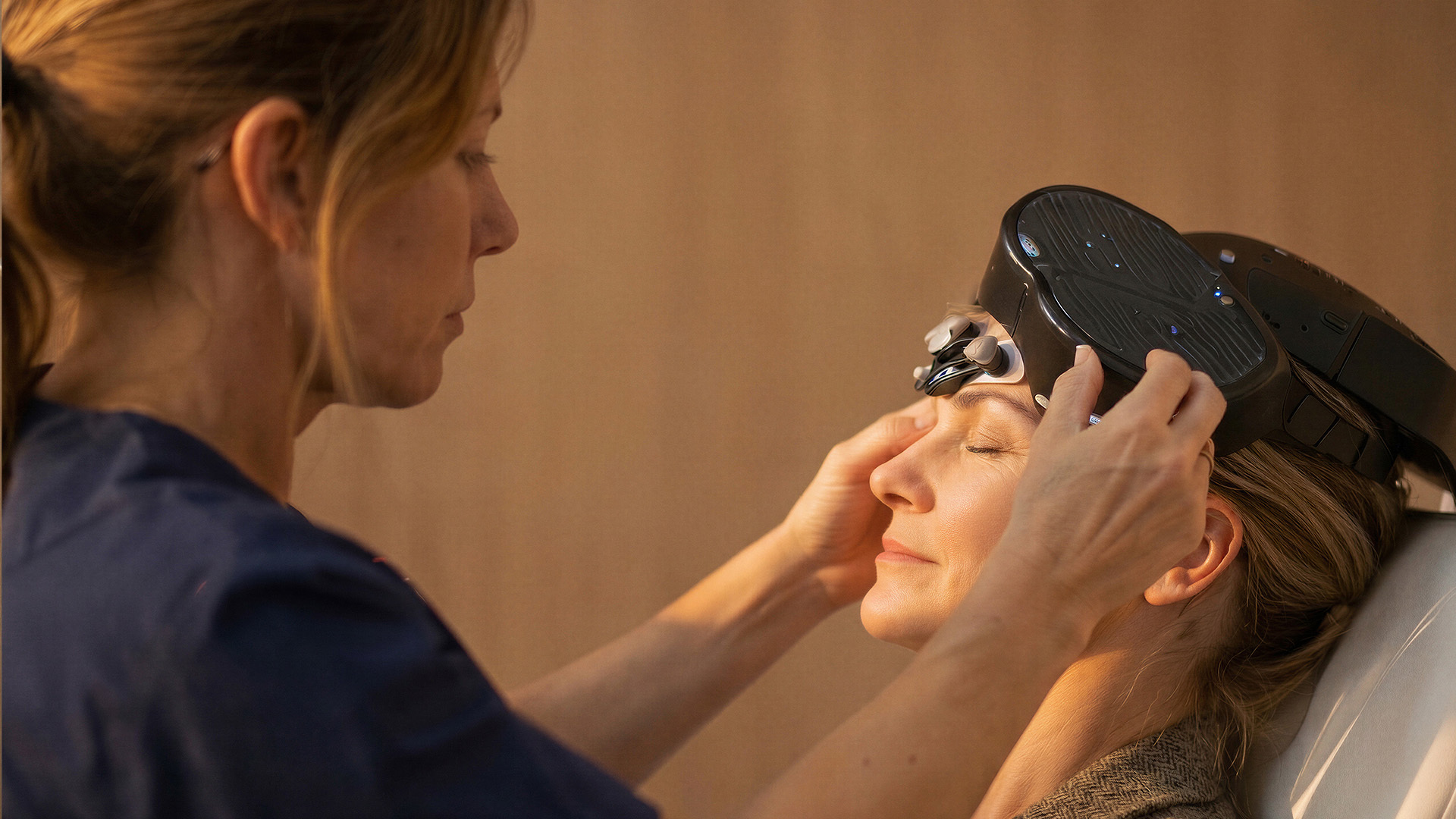
Transcranial magnetic stimulation (TMS)
A non-invasive, drug-free treatment that directly modulates the brain circuits involved in depression, OCD, anxiety and other conditions. Guided by neuroimaging and artificial intelligence.
What is transcranial magnetic stimulation?
Transcranial magnetic stimulation (TMS) is a neuromodulation technique that uses magnetic pulses —the same physical principles as an MRI scan— to non-invasively induce small electrical currents in the cerebral cortex. A coil placed over the head modulates the activity of a specific brain region, with no surgery, anesthesia or hospital stay.
Unlike drugs, which act on the whole body, TMS is focal: it works on the specific brain circuits involved in each disorder. That's why it avoids many of the systemic side effects of medication and lets you resume normal life the same day.
How transcranial magnetic stimulation (TMS) works
Read the full guideAdvantages of TMS
Beyond its clinical efficacy, TMS offers practical advantages over other treatments: it requires no surgery or medication, and fits easily into your daily life.
- Non-invasive: no surgery or anesthesia; you stay awake.
- Drug-free: it introduces no substances into the body.
- Focal: it acts on specific circuits, not the whole body.
- Outpatient: short sessions, no admission.
What does TMS treat?
TMS has evidence in a growing number of conditions. At Connectoma we apply personalized protocols by pathology:
Depression
The best-evidenced use. Especially effective in drug-resistant depression.
More infoOCD
Modulates the circuits of obsessive-compulsive disorder, with FDA clearance for this indication.
More infoAnxiety
Helps calm the stress response when anxiety doesn't ease with usual treatment.
More infoAddictions
Acts on the circuits of craving and reward to break the cycle of dependence.
More infoPersonalized, accelerated TMS for depression: the Connectoma approach
Conventional TMS applies one daily session over 4 to 6 weeks on a standard target. Connectoma goes further: it calculates the stimulation point from functional neuroimaging of your own brain, applies stimulation with millimetric neuronavigation and concentrates treatment into accelerated protocols. In resistant depression, neuroimaging-guided protocols have reached remission rates of up to 79%.
- Target calculated with individual functional MRI (fMRI)
- Neuronavigation with millimetric precision
- Accelerated protocols: results in days, not weeks
- Compatible with your medication
Your path to overcoming depression

Brain Scan
We perform an imaging study to understand how your brain works and find the area where to apply the treatment.
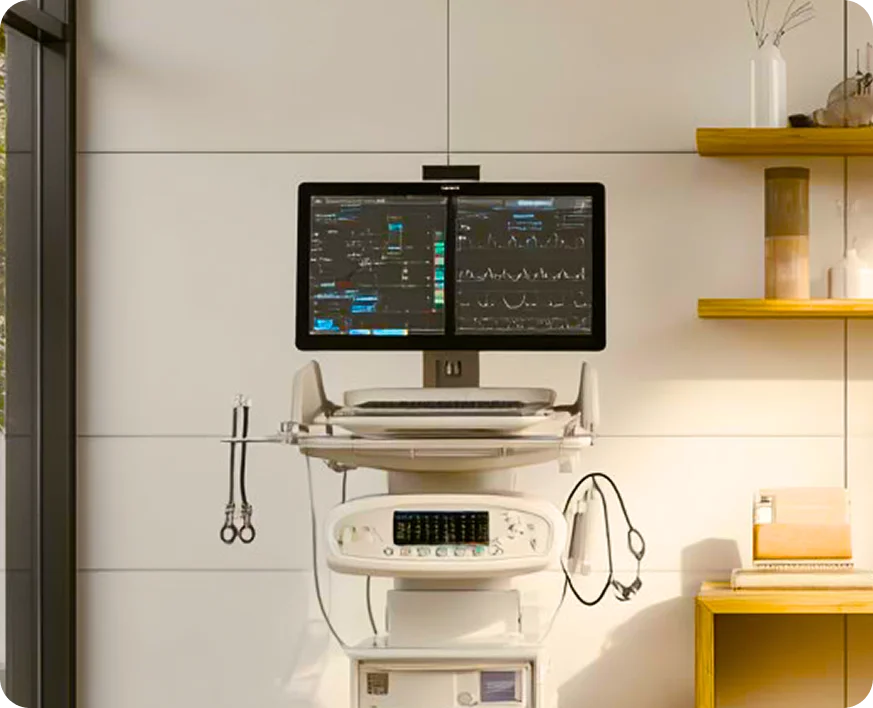
Personalized Plan
Our specialists design a unique treatment for you, tailored to your specific needs.
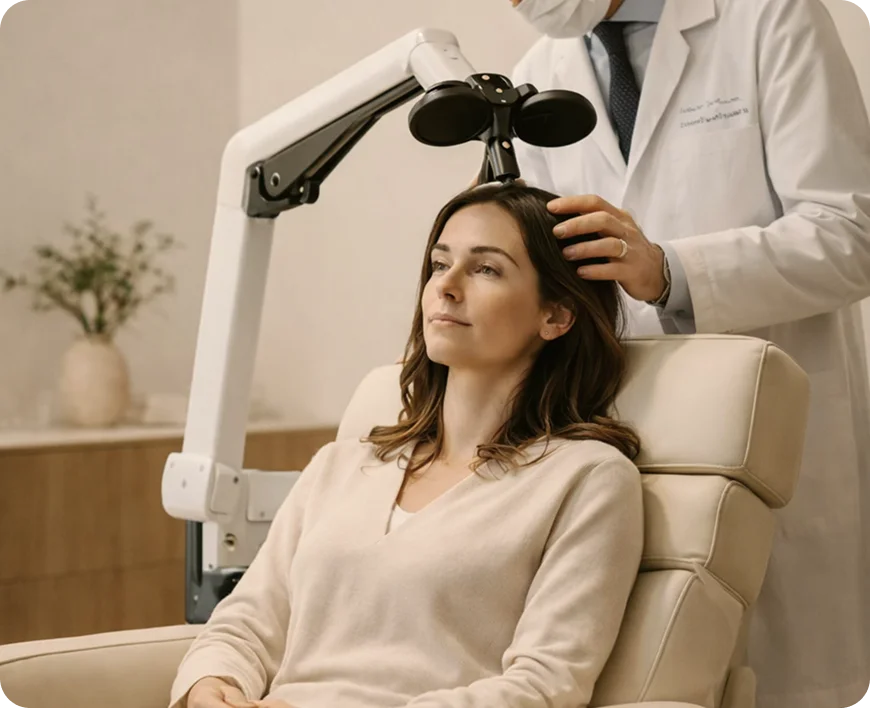
Guided Treatment
We apply transcranial magnetic stimulation (TMS) precisely in the right area of your brain to achieve the best results.

Close Follow-up
We accompany you throughout the process, evaluating your progress and adjusting treatment if necessary.
A patient's story
Is TMS safe?
TMS has a very favorable safety profile and is backed by agencies such as the FDA and the EMA. It's not painful: most patients describe a tapping sensation on the scalp. The most common side effects are mild and temporary, such as local discomfort or a headache.
Unlike antidepressants, it doesn't cause systemic effects such as weight gain or sexual dysfunction. Accelerated protocols don't increase the risk of serious adverse events compared with conventional TMS.
TMS is not the same as electroconvulsive therapy (ECT)
It's a common confusion. TMS uses gentle magnetic fields, is performed with the patient awake, without anesthesia or seizures, and doesn't affect memory. Electroconvulsive therapy (ECT, the old "electroshock") is a different procedure, performed under anesthesia. They are different treatments.
The evidence behind TMS
TMS is one of the neuromodulation techniques with the most clinical backing. Its efficacy and safety have been studied for decades, and research into accelerated, personalized TMS keeps expanding its indications.
40+
years of clinical research since its development in 1985
2008
first FDA clearance, for the treatment of depression
2018
FDA clearance for the treatment of OCD
79%
remission achieved in resistant depression with personalized neuroimaging-guided protocols (Cole et al., 2022)
Frequently asked questions about TMS
The best-evidenced indication is depression, especially the drug-resistant form. TMS is also used or being researched in OCD, anxiety and addictions, among other conditions.
No. TMS is non-invasive and painless. Most patients describe a tapping sensation on the scalp during the first sessions, which usually fades quickly. You can return to your routine immediately after.
Yes. It is backed by the FDA and the EMA and has a very favorable safety profile. The most common side effects are mild and temporary, such as local discomfort or a slight headache.
They are different treatments. TMS uses gentle magnetic fields, is performed with the patient awake, without anesthesia or seizures, and doesn't affect memory. Electroconvulsive therapy is applied under anesthesia and is a different procedure.
It depends on the protocol. Conventional TMS usually requires one daily session over 4 to 6 weeks; accelerated protocols concentrate several sessions per day into a few days. Each session lasts just a few minutes.
Not necessarily. TMS is complementary and can be combined with your medication. Your doctor will assess your case and adjust the plan if needed.
It's the evolution of TMS: it concentrates several sessions per day into a few days (accelerated) and calculates the exact stimulation point from each patient's functional neuroimaging (personalized), instead of using a generic target.
The price depends on the center and the protocol indicated for your case. During the initial no-obligation assessment, our team will inform you of the cost and the options available.
At partner clinics and medical centers that meet Connectoma's quality and safety standards. We can point you to the nearest center during your assessment.
Could TMS help you?
Talk to our team, no strings attached, and find the most suitable treatment for your case.
This page is for informational purposes and does not replace professional medical advice. TMS's best-evidenced indication is depression; in other conditions it is applied according to the available evidence and as a personalized treatment. No treatment guarantees remission.
Keep learning
Clear resources to understand the technology.
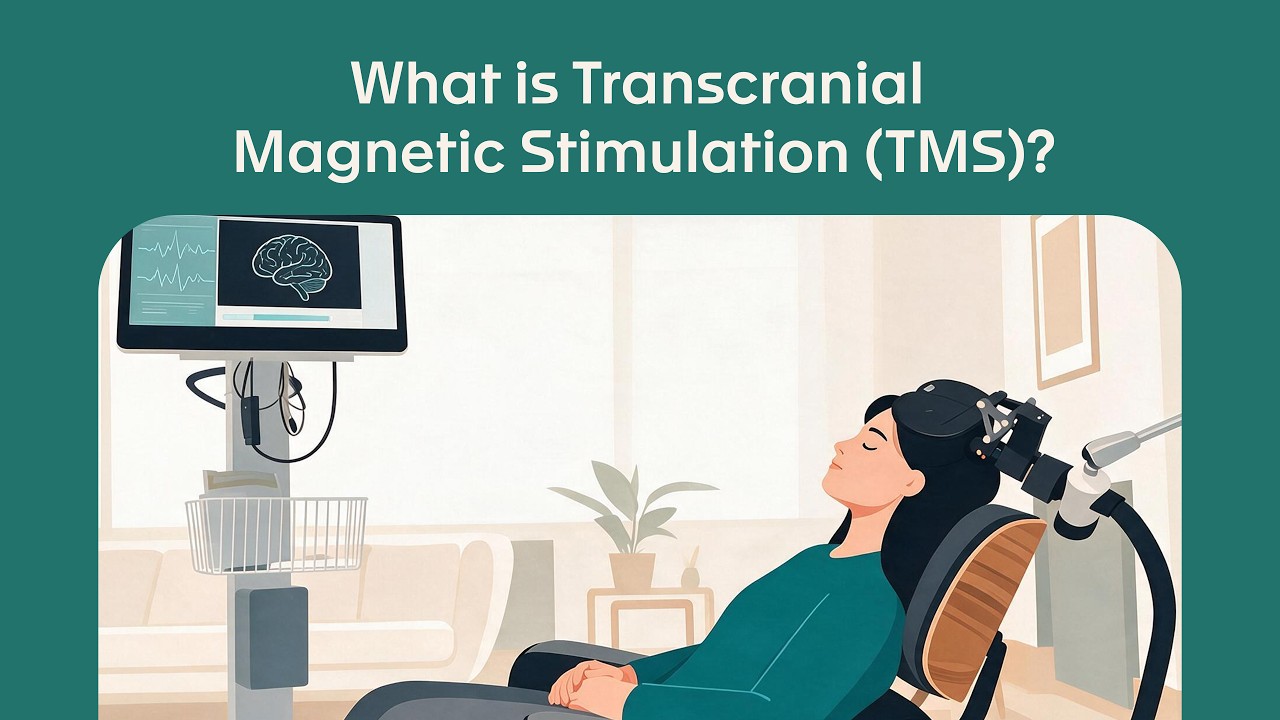
How transcranial magnetic stimulation (TMS) works
A clear explanation of how TMS works: how magnetic pulses modulate the brain’s circuits, what a session feels like, and why it is a non-invasive, safe technique. With video.
Read more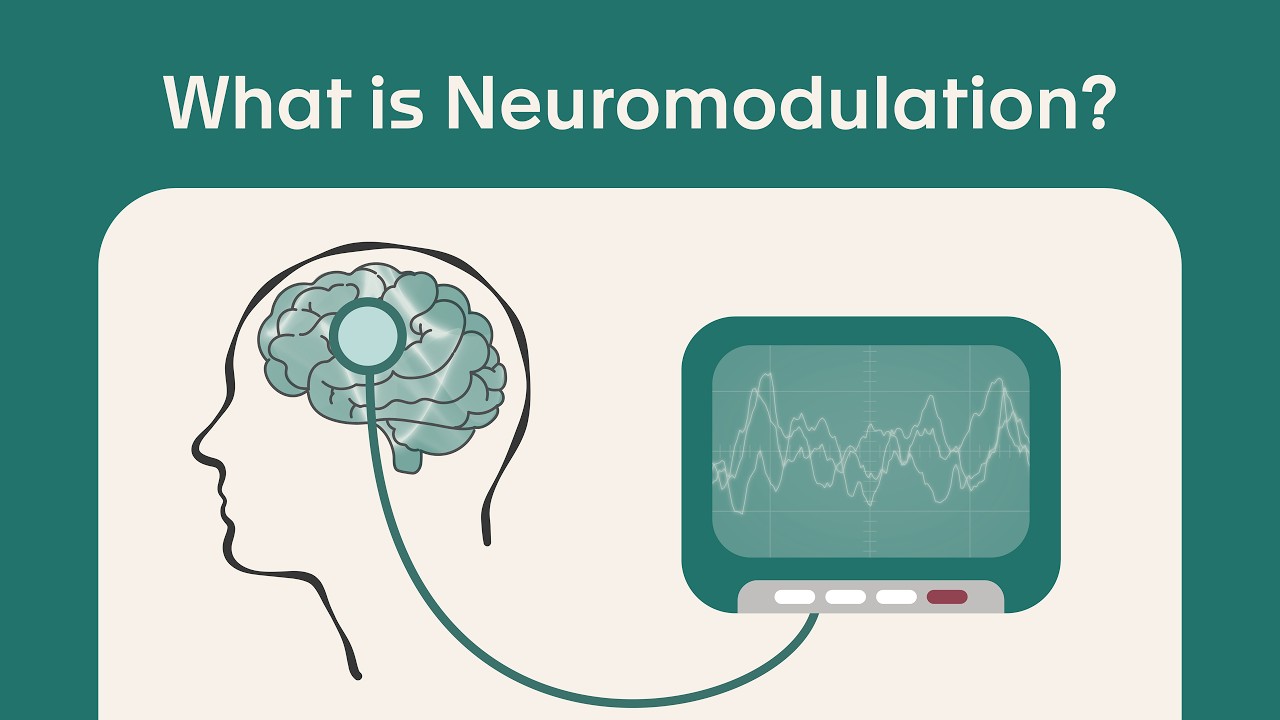
What is neuromodulation, and how it rebalances the brain’s circuits
Neuromodulation retunes the activity of altered brain circuits using controlled stimuli. Here is what it is, the types that exist, and why it is central to precision mental health.
Read more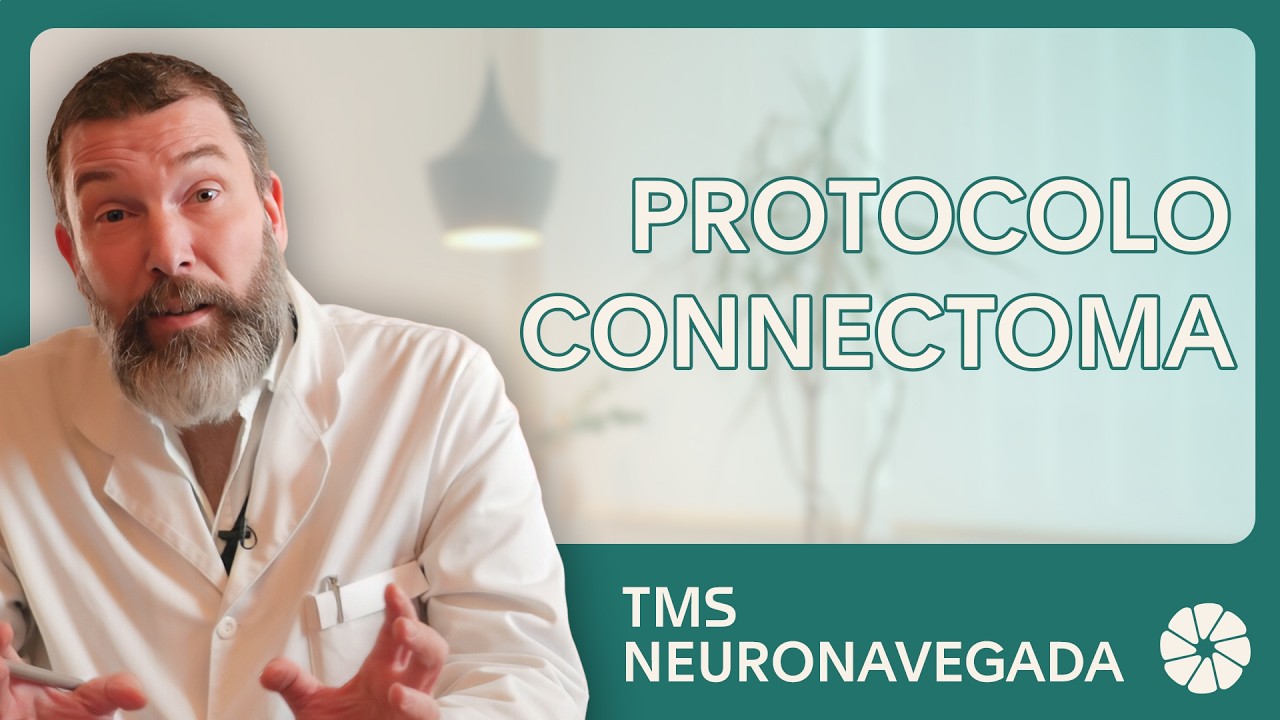
How Connectoma uses precision neuroimaging
Magnetic stimulation is no longer a "one-size-fits-all" procedure. With functional MRI, artificial intelligence and neuronavigation we calculate the exact brain point to treat in each person.
Read more